Disappointed, in short
Feeling disappointed means being let down when something did not turn out as hoped. What helps: naming it, letting it be there without judging it, and not replaying it over and over.
The job went to someone else, the trip got cancelled, the evening you’d looked forward to all week fell flat.
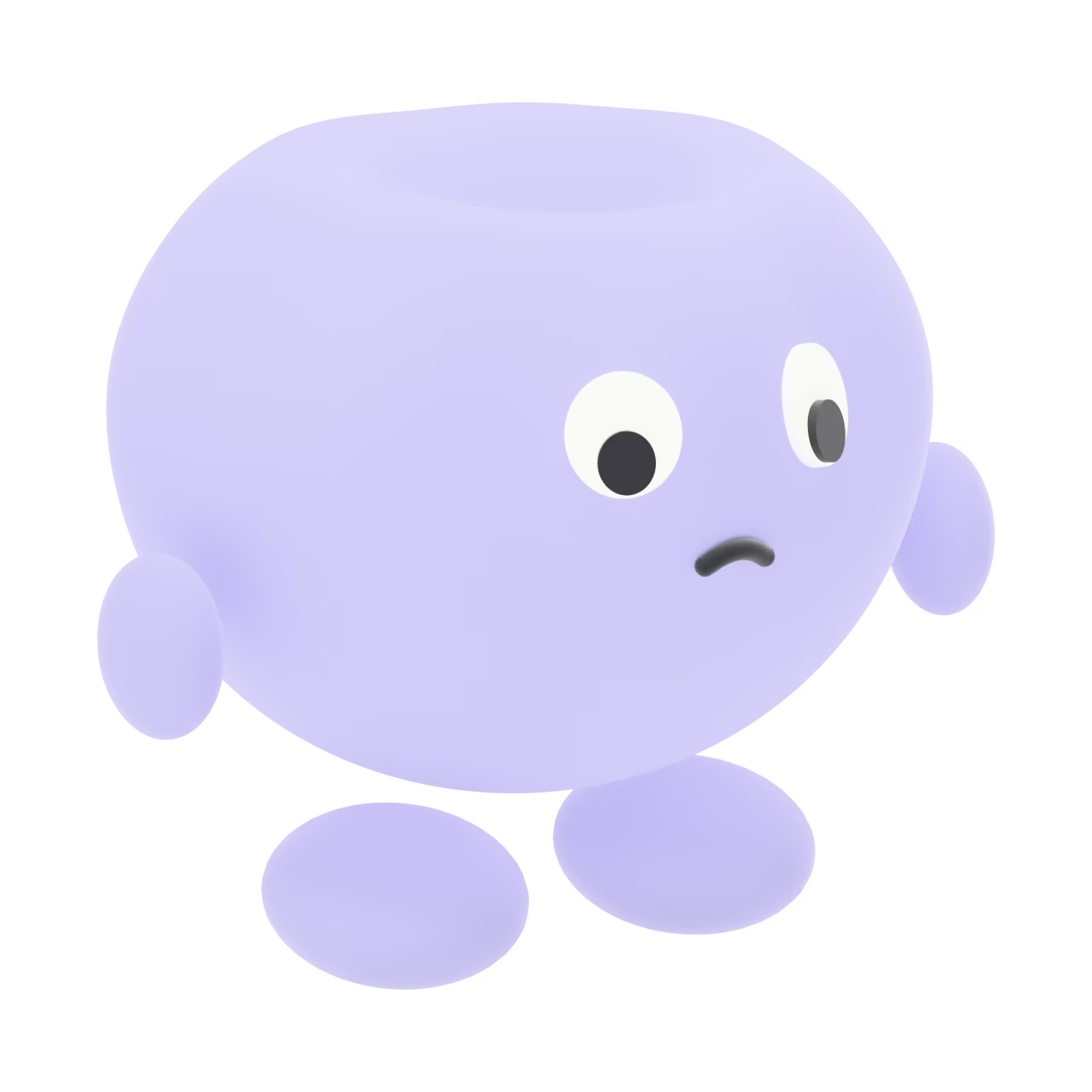
“Let down when something did not turn out as hoped”: that’s Disappointed in Feelbits. The word “hoped” in it matters more than it looks.
Why disappointment stings
Disappointment needs a hope to start from. Researchers who study it describe it as the feeling that comes when an outcome doesn’t live up to what you expected (Zeelenberg and colleagues, 2000). You can’t be let down by something you never hoped for. So in a way, disappointment is a sign that something mattered to you.
How much it stings depends on more than the outcome itself. In gambling experiments, results people didn’t see coming had a bigger emotional impact than ones they expected, and any result felt worse when a better one had been possible (Mellers and colleagues, 1997). So the same result can feel fine or like a letdown, depending on what you expected and what else could have happened.
Disappointed in your own feelings
Sometimes the letdown isn’t about what happened but about how you feel. In one lab study, women who had just read about how good happiness is for you felt less happy after a happy film clip than women who hadn’t. They were more disappointed in their own feelings: the gap between how they felt and how they thought they should feel turned into disappointment (Mauss and colleagues, 2011).
If a big night or a holiday felt a bit flat, the “should” may be doing some of the damage.
Disappointed, sad or frustrated?
A letdown, a loss, a block, and the hope that came before, in Feelbits’ words:
- Disappointed: let down when something did not turn out as hoped.
- Sad: heavy and down because of a loss or something that hurt.
- Frustrated: blocked from something you want or are trying to do.
- Hopeful: expecting that things can turn out well.
Frustrated is about a block while you’re still trying. Disappointed comes once the result is in and it isn’t what you hoped for. Sad is heavier, about a loss or something that hurt. And hopeful is often where disappointment starts: the hope that came before.
One more word sits close by: regret. Researchers separate the two. Regret comes when a decision looks wrong in hindsight, disappointment when the outcome falls short of what you expected (Zeelenberg and colleagues, 2000). “I should have picked the other one” is regret. “I hoped for more” is disappointment.
Telling these apart is worth it. In a three-week study of 106 young social drinkers, on days when bad feelings ran high, the ones who told those feelings apart drank less (Kashdan and colleagues, 2010). It isn’t about knowing rare words. It’s about not using one word for everything.
What helps after a letdown
Name it
Finding the word for it, whether you say it, write it or pick it from a list, settles the brain’s alarm a little (Lieberman and colleagues, 2007). “Disappointed” also tells you more than “bad”: it points at the hope that didn’t work out.
Let it be there
Letting feelings be without judging them goes with feeling less upset when stress hits (Ford and colleagues, 2018). Feeling let down when something you cared about didn’t happen makes sense. You don’t need to talk yourself out of it.
Don’t keep replaying it
In daily-report studies of five feelings, including sadness and anger, a feeling lasted longer when the thing that set it off came back, even just in people’s heads (Verduyn and colleagues, 2009). Going over the letdown again and again can keep it going.
You may bounce back sooner than you think
In six studies, people overestimated how long they would feel bad after things like a breakup, a lost election, being turned down for tenure or a rejection from an employer. We tend to overlook how good our minds are at taking the edge off bad news (Gilbert and colleagues, 1998).
Journal prompts for feeling disappointed
A few gentle questions for after a letdown. Take whichever ones feel okay to answer today.
Notice
- What did you hope would happen, and what happened instead?
- How strong is the letdown now, compared with when you first found out?
- Is it disappointed, or closer to sad, frustrated or regret?
- Where in your day does it show up most: mornings, quiet moments, when someone asks?
Understand
- What does this letdown say about what matters to you?
- Was the hope about how things would turn out, or about how you thought you should feel?
- Is a “should” making it heavier, like “this should have been perfect”?
- Did something better seem within reach, and does that make it sting more?
- What brings the replay back: a place, a person, a notification?
Act
- What would be kind to yourself in the next hour?
- Who could you tell who would just listen?
- Is there still a way to try again, or is it time to let this one go?
- What’s one small thing you could look forward to this week?
- Thinking of an earlier letdown, how long did the sting really last?
Disappointed in Feelbits
When a letdown lands, tap Disappointed on the dial in Feelbits and its Feelbit joins your village. You can add what it’s about in a few words, if you like. The Learn path How feelings work has short lessons on naming feelings and finding the closest word, and Small joys has one called “Am I happy yet?” on the gap between how you feel and how you think you should feel. How to name your feelings has more on picking the closest word.
When it’s more than a letdown
If a letdown turns into a heaviness that hangs on and gets in the way of daily life most days, it’s worth talking to a doctor or therapist.
What to say to someone who is disappointed
Disappointed, or something close?
Guides for when you feel disappointed
Not sure which word fits? Try the feeling word finder.
Sources
- Zeelenberg, M., van Dijk, W. W., Manstead, A. S. R., & van der Pligt, J. (2000). On bad decisions and disconfirmed expectancies: The psychology of regret and disappointment. Cognition and Emotion, 14(4), 521–541. doi.org/10.1080/026999300402781
- Mellers, B. A., Schwartz, A., Ho, K., & Ritov, I. (1997). Decision affect theory: Emotional reactions to the outcomes of risky options. Psychological Science, 8(6), 423–429. doi.org/10.1111/j.1467-9280.1997.tb00455.x
- Mauss, I. B., Tamir, M., Anderson, C. L., & Savino, N. S. (2011). Can seeking happiness make people unhappy? Paradoxical effects of valuing happiness. Emotion, 11(4), 807–815. doi.org/10.1037/a0022010
- Kashdan, T. B., Ferssizidis, P., Collins, R. L., & Muraven, M. (2010). Emotion differentiation as resilience against excessive alcohol use: An ecological momentary assessment in underage social drinkers. Psychological Science, 21(9), 1341–1347. doi.org/10.1177/0956797610379863
- Lieberman, M. D., et al. (2007). Putting feelings into words. Psychological Science, 18(5), 421–428. doi.org/10.1111/j.1467-9280.2007.01916.x
- Ford, B. Q., Lam, P., John, O. P., & Mauss, I. B. (2018). The psychological health benefits of accepting negative emotions and thoughts: Laboratory, diary, and longitudinal evidence. Journal of Personality and Social Psychology, 115(6), 1075–1092. doi.org/10.1037/pspp0000157
- Verduyn, P., Delvaux, E., Van Coillie, H., Tuerlinckx, F., & Van Mechelen, I. (2009). Predicting the duration of emotional experience: Two experience sampling studies. Emotion, 9(1), 83–91. doi.org/10.1037/a0014610
- Gilbert, D. T., Pinel, E. C., Wilson, T. D., Blumberg, S. J., & Wheatley, T. P. (1998). Immune neglect: A source of durability bias in affective forecasting. Journal of Personality and Social Psychology, 75(3), 617–638. doi.org/10.1037/0022-3514.75.3.617