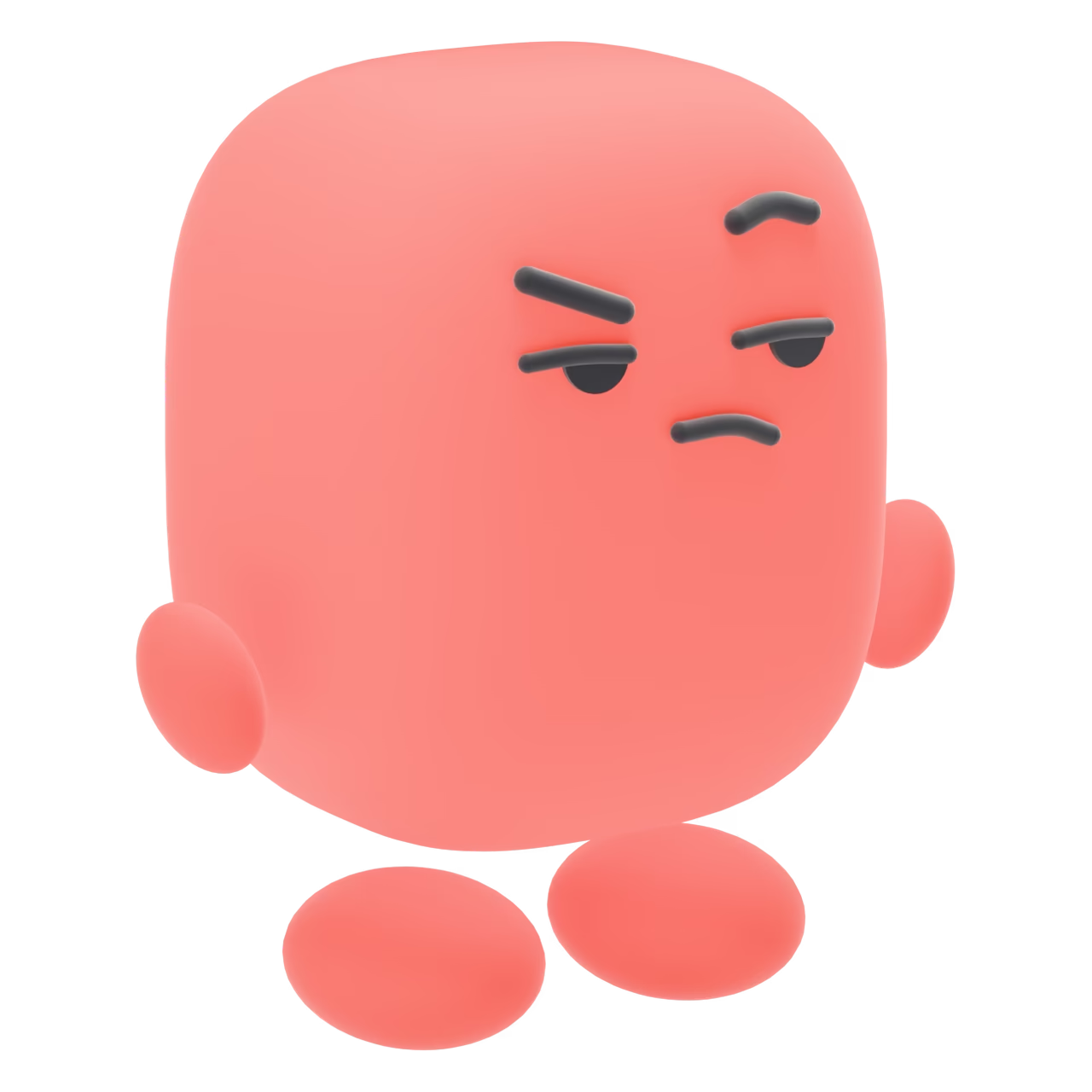
Annoyed, in short
Feeling annoyed means being mildly bothered or irritated by something. What helps: naming it, checking whether hunger or short sleep is behind it, and giving your mind something else instead of replaying it.
A loud chewer, a slow app, a reply-all that didn’t need to happen. Annoyance is a mild feeling, and usually a short one.
Why it usually fades fast
In one study, 233 high school students recalled recent feelings and how long each one lasted. Out of 27 feelings, irritation was among the shortest. The feelings that lasted longest were usually about things that mattered a lot, and came with more going over it in your head (Verduyn and Lavrijsen, 2015).
So if a small annoyance is still with you hours later, ask: does it matter more than it looks, or have I been replaying it?
Small things still count
Small hassles are easy to wave off. But in a classic study, middle-aged adults filled in a list of everyday hassles once a month for ten months. Their hassles predicted their psychological symptoms better than big life events did (Kanner and colleagues, 1981). The two went together, which doesn’t show the hassles caused the symptoms, but the small stuff isn’t nothing.
How annoyance spills
You might expect daily hassles to stack up. In a six-week diary study of 166 married couples, several hassles on the same day didn’t make each other worse; moods levelled off instead. And when a hassle came back day after day, people got used to almost every kind by the second day. The exception was conflict with other people. It was by far the most upsetting kind of daily stress, and it didn’t wear off like that (Bolger and colleagues, 1989).
Annoyance can travel, though. In one study of 43 couples who kept diaries for five days, people were more angry and withdrawn with their partner after a day of tense run-ins at work (Story and Repetti, 2006).
Replaying makes it worse. In one experiment, students got an insulting comment on an essay in the morning, and half of them were told to keep thinking about it all day. Hours later, the chewers were harsher to a new partner who’d made a slightly snippy remark. When the new partner was friendly, they were no harsher than anyone else (Bushman and colleagues, 2005). Chewing on it didn’t make them lash out on its own. It made the next small annoyance land harder.
Annoyed, frustrated or angry?
Four feelings that start small and get hotter:
- Annoyed: mildly bothered or irritated by something.
- Frustrated: blocked from something you want or are trying to do.
- Angry: heated displeasure at something that feels wrong or unfair.
- Furious: intensely angry, close to boiling over.
Annoyed is about something small that bugs you. Frustrated is about a goal and whatever’s in its way. Angry has a “that’s not fair” in it. Furious is anger with the volume all the way up.
What helps when you’re annoyed
Name it
Naming what you feel quiets the brain’s alarm a little (Lieberman and colleagues, 2007). “I’m annoyed” is a small sentence, and it helps you see the feeling as something passing through.
Check what’s under it
Hunger and short sleep can make anger and irritation come easier (Swami and colleagues, 2022; Krizan and Hisler, 2019). Sometimes the fix is a snack, not a word with the loud chewer.
Give your mind something else
In the chewing studies, people who were distracted, for example by describing the layout of their campus, were less aggressive than the chewers (Bushman and colleagues, 2005).
If it keeps coming back, say it small
When the same thing bugs you every day, it may be worth a short, calm word. In one study, lines that started with “I” and showed the other person’s side were rated least likely to make them defensive (Rogers, Howieson and Neame, 2018). “I know you’re busy, but the dishes are getting to me” is easier to hear than “You never clean up”.
Journal prompts for feeling annoyed
A few small questions for a small feeling. Pick one or two.
Notice
- What exactly is bugging you right now: a sound, a person, a wait?
- Where do you notice it: a tight jaw, a sigh, a shorter fuse?
- Somewhere between mildly bothered and properly angry, where is it?
- Is it fading already, or still with you hours later?
Understand
- Is this the first time, or does the same thing bug you every day?
- Does it matter more than it looks, or have you been replaying it?
- Are you hungry, tired or short on sleep right now?
- Did a tense moment earlier in the day spill over into this one?
- Is something standing in your way, which would make it closer to frustrated?
Act
- What could take your mind off it for ten minutes?
- Would a snack or an early night help more than a word with anyone?
- If it keeps coming back, what short, calm sentence could you say, starting with “I”?
- Is this worth bringing up, or worth letting go?
Annoyed in Feelbits
Small irritations get a Feelbit too: tap Annoyed and that’s a check-in. Add a few words about what it’s about, and over time you may spot the same meeting or the same hungry hour. Chewing on it, a lesson in the Keep your cool path in Learn, walks through the essay study above, one card at a time. For more on spotting patterns, see How to track your mood.
Angry for no reason? Why you feel so irritable What to say to someone who is frustrated
Annoyed, or something close?
Guides for when you feel annoyed
Not sure which word fits? Try the feeling word finder.
Sources
- Verduyn, P., & Lavrijsen, S. (2015). Which emotions last longest and why: The role of event importance and rumination. Motivation and Emotion, 39(1), 119–127. doi.org/10.1007/s11031-014-9445-y
- Kanner, A. D., Coyne, J. C., Schaefer, C., & Lazarus, R. S. (1981). Comparison of two modes of stress measurement: Daily hassles and uplifts versus major life events. Journal of Behavioral Medicine, 4(1), 1–39. doi.org/10.1007/bf00844845
- Bolger, N., DeLongis, A., Kessler, R. C., & Schilling, E. A. (1989). Effects of daily stress on negative mood. Journal of Personality and Social Psychology, 57(5), 808–818. doi.org/10.1037/0022-3514.57.5.808
- Story, L. B., & Repetti, R. (2006). Daily occupational stressors and marital behavior. Journal of Family Psychology, 20(4), 690–700. doi.org/10.1037/0893-3200.20.4.690
- Bushman, B. J., Bonacci, A. M., Pedersen, W. C., Vasquez, E. A., & Miller, N. (2005). Chewing on it can chew you up: Effects of rumination on triggered displaced aggression. Journal of Personality and Social Psychology, 88(6), 969–983. doi.org/10.1037/0022-3514.88.6.969
- Lieberman, M. D., et al. (2007). Putting feelings into words. Psychological Science, 18(5), 421–428. doi.org/10.1111/j.1467-9280.2007.01916.x
- Swami, V., Hochstöger, S., Kargl, E., & Stieger, S. (2022). Hangry in the field: An experience sampling study on the impact of hunger on anger, irritability, and affect. PLoS ONE, 17(7), e0269629. doi.org/10.1371/journal.pone.0269629
- Krizan, Z., & Hisler, G. (2019). Sleepy anger: Restricted sleep amplifies angry feelings. Journal of Experimental Psychology: General, 148(7), 1239–1250. doi.org/10.1037/xge0000522
- Rogers, S. L., Howieson, J., & Neame, C. (2018). I understand you feel that way, but I feel this way: The benefits of I-language and communicating perspective during conflict. PeerJ, 6, e4831. doi.org/10.7717/peerj.4831