Curious, in short
Feeling curious means wanting to explore, learn or find out more. To feel it more often: find the question you want answered, start with the part you wonder about, and make things a little harder.
A question you can’t let go of, a street you’ve never walked down, a “wait, how does that work?” that keeps you reading long past bedtime.
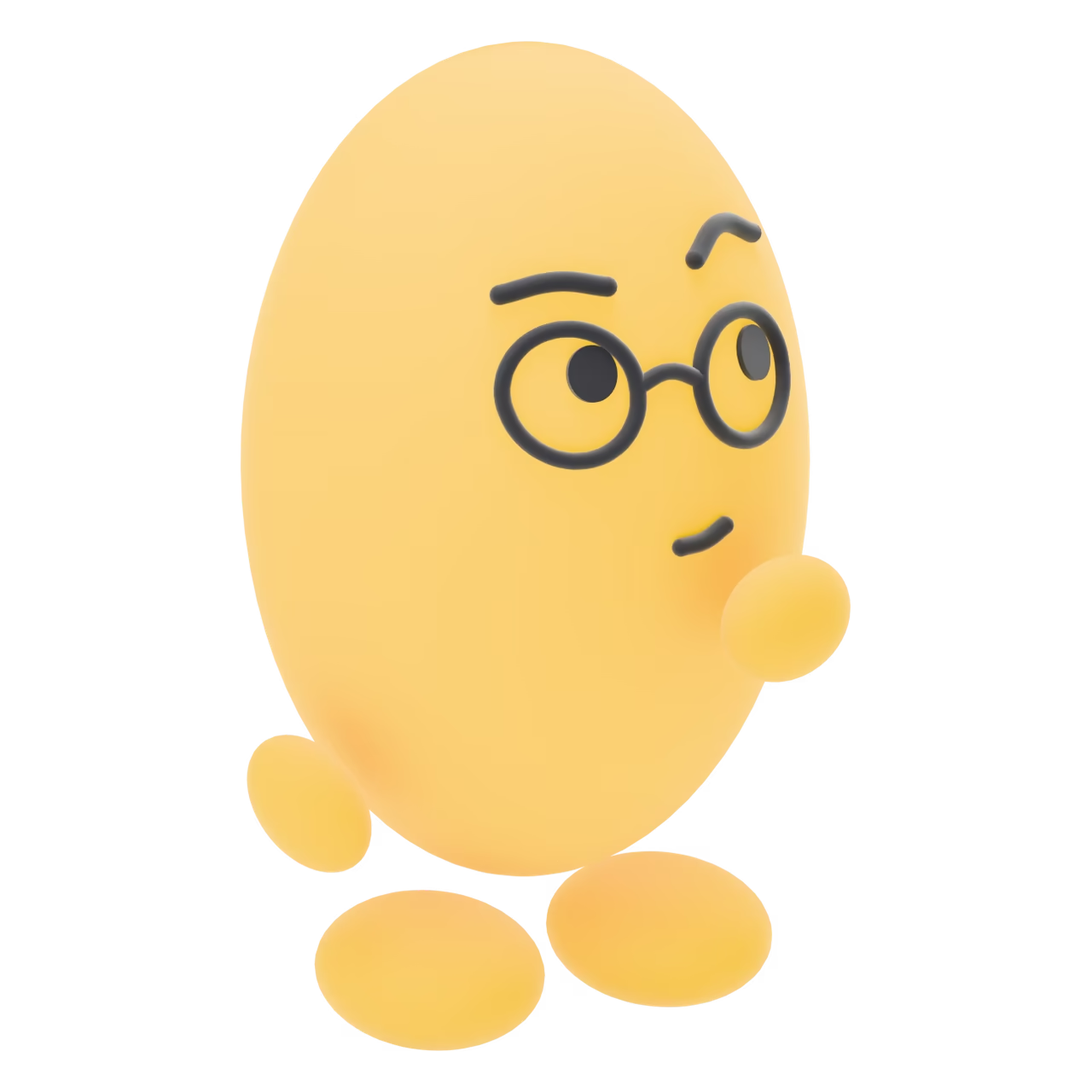
In Feelbits, Curious means “wanting to explore, learn or find out more”. It’s a good feeling with a pull to it: it wants to take you somewhere.
What curiosity is
Curiosity is easier to feel than to pin down. Two researchers who reviewed the psychology and brain science of it called it a basic part of how we think and a motivator for learning, and noted that scientists still don’t agree on exactly what counts as curiosity (Kidd and Hayden, 2015).
One well-known account, the information gap theory, says curiosity shows up when you notice a gap in what you know or understand. You’re missing a piece, and you want it (Loewenstein, 1994). The same paper lists some of curiosity’s quirks: it can be intense, it often passes quickly, it goes with acting on impulse, and the answer can be a bit of a letdown once you have it. If you’ve ever looked something up at 1 a.m. and thought “oh, is that all?”, that’s the one.
Why curiosity pulls so hard
In one research project, people read trivia questions in a brain scanner and rated how curious they were about each answer. The more curious they were, the more active the brain areas linked with expecting a reward. In a follow-up study, the more curious people were, the more they were willing to give up to see the answer, whether limited tokens or time spent waiting (Kang and colleagues, 2009).
It seems to help things stick, too. In the same project, people who were more curious about a question recalled surprising answers better 1 to 2 weeks later. In two small experiments from another lab, people remembered more answers to trivia questions they’d been curious about, both straight away and a day later. They even recognised unrelated faces, shown while they waited for an answer, slightly better when they were curious (Gruber, Gelman and Ranganath, 2014).
Curious, bored or excited?
Curious next to three feelings it gets confused with:
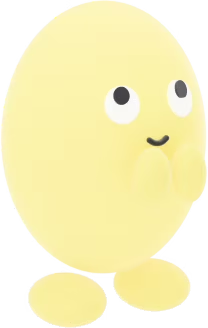
- Curious: wanting to explore, learn or find out more.
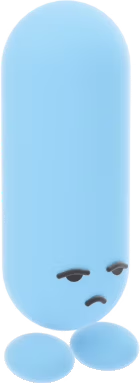
- Bored: nothing feels interesting or engaging right now.
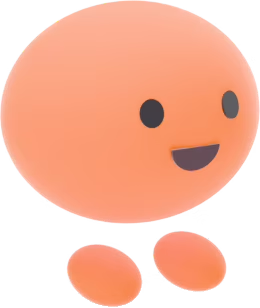
- Excited: buzzing with eager energy about something good.
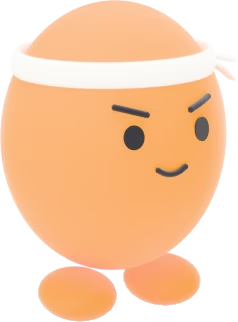
- Motivated: ready and willing to get things done.
Curious has a question in it. Bored is the flip side: you’d like something to grab you, and nothing does. Excited buzzes about something good, often still ahead. Motivated wants to get things done, while curious is happy just to find out.
How to feel curious more often
Find the question
If curiosity starts with noticing a gap (Loewenstein, 1994), it may help to make the gap visible. Before you read about something, or start a task you’ve been putting off, ask yourself what exactly you’d like to know by the end.
Start with what you wonder about
The researchers behind the trivia and faces study say their findings point to the value of sparking curiosity to make learning work better (Gruber, Gelman and Ranganath, 2014). They were small studies, but it’s an easy thing to try: when you have to learn something, open with the part you’re actually curious about.
Make it a little harder
Flow is being fully absorbed in what you’re doing, and time seems to fly. It tends to show up when a challenge stretches your skills a little. Too easy, and it tips into boredom (Nakamura and Csikszentmihalyi, 2002). If a hobby has stopped feeling interesting, a slightly harder version may bring the questions back.
Treat boredom as a clue
Some researchers think boredom has a job: when what you’re doing has stopped giving you anything, it pushes you to look for something new (Bench and Lench, 2013). One model says it comes from a mismatch: a task asks too little of your mind, or too much, or doesn’t connect to anything you care about (Westgate and Wilson, 2018). Next time you’re bored, ask which one it is. The answer may point you to something you’d rather be curious about.
Journal prompts for feeling curious
Start with the question that’s bugging you most. The rest can wait for another day.
Notice
- What exactly are you curious about right now?
- Can you put the question in one sentence?
- What caught your attention first: something you saw, read, heard or tried?
- How strong is the pull to find out, from 1 to 10?
Understand
- What do you already know about it, and what’s the missing piece?
- Why does this one grab you, when other things don’t?
- When did you last feel this curious, and what was it about?
- Is it pulling you away from something that bores you? What’s missing from that?
- Is it curious, or closer to excited or motivated?
Act
- What’s one small way you could find out more today?
- Who could you ask, or who would enjoy wondering about this with you?
- Is there a task coming up where you could start with the part you wonder about?
- What’s a slightly harder version of something you already enjoy?
- Where could you write the question down so it’s still there tomorrow?
Curious in Feelbits
Turn the dial in Feelbits to Curious and tap it: that’s a check-in, and a little Curious Feelbit joins your village. Write the question in the journal line, and over a few weeks you may spot what tends to spark it. And if you’re curious about feelings themselves, that’s what Learn is for: four paths of short lessons, each with its sources. Small joys has one on flow. How to name your feelings is a good first read.
Curious, or something close?
Not sure which word fits? Try the feeling word finder.
Sources
- Kidd, C., & Hayden, B. Y. (2015). The psychology and neuroscience of curiosity. Neuron, 88(3), 449–460. doi.org/10.1016/j.neuron.2015.09.010
- Loewenstein, G. (1994). The psychology of curiosity: A review and reinterpretation. Psychological Bulletin, 116(1), 75–98. doi.org/10.1037/0033-2909.116.1.75
- Kang, M. J., Hsu, M., Krajbich, I. M., Loewenstein, G., McClure, S. M., Wang, J. T., & Camerer, C. F. (2009). The wick in the candle of learning: Epistemic curiosity activates reward circuitry and enhances memory. Psychological Science, 20(8), 963–973. doi.org/10.1111/j.1467-9280.2009.02402.x
- Gruber, M. J., Gelman, B. D., & Ranganath, C. (2014). States of curiosity modulate hippocampus-dependent learning via the dopaminergic circuit. Neuron, 84(2), 486–496. doi.org/10.1016/j.neuron.2014.08.060
- Nakamura, J., & Csikszentmihalyi, M. (2002). The concept of flow. In C. R. Snyder & S. J. Lopez (Eds.), Handbook of Positive Psychology (pp. 89–105). Oxford University Press. doi.org/10.1093/oso/9780195135336.003.0007
- Bench, S. W., & Lench, H. C. (2013). On the function of boredom. Behavioral Sciences, 3(3), 459–472. doi.org/10.3390/bs3030459
- Westgate, E. C., & Wilson, T. D. (2018). Boring thoughts and bored minds: The MAC model of boredom and cognitive engagement. Psychological Review, 125(5), 689–713. doi.org/10.1037/rev0000097