Stressed, in short
Feeling stressed means being under pressure, with too much being asked of you. What helps: reading a racing heart as fuel for the challenge, talking to yourself by your own name, and sharing how you feel with someone you trust.
A deadline, a full inbox, three people who all need something by Friday. Everything needs you, and all at the same time.
The app’s meaning for Stressed is “under pressure, with too much being asked of you”. The rest comes from the research behind the app’s Learn lessons, plus a few studies and health bodies on stress itself.
What stress is for
The World Health Organization describes stress as a state of worry or mental tension caused by a difficult situation, and as a natural response that pushes us to deal with challenges and threats. Everyone has some, and a little of it can help you get through the day (World Health Organization, 2026).
One way researchers look at it: you weigh what a moment asks of you against what you’ve got to meet it. When your resources meet or beat the demands, it tends to feel like a challenge. When the demands outrun them, it feels like a threat (Seery, 2011). That second one is pretty much the app’s meaning: too much being asked of you.
A short burst and stress that never stops aren’t the same thing. In young, healthy people, short stress responses may be helpful and usually don’t burden health. When the pressure doesn’t let up, the long-term effects can harm health, especially in older or less healthy people (Schneiderman, Ironson and Siegel, 2005).
Stress is also catchy. In a study in Germany, people simply watched someone go through a tough interview and mental maths, and 26% of the watchers had a real rise in the stress hormone cortisol. Watching a partner, it was 40%; watching a stranger, 10% (Engert and colleagues, 2014).
How stress feels in your body
Stress can make it hard to relax or concentrate. It can come with headaches or other aches, an upset stomach, trouble sleeping, and eating less or more than usual (World Health Organization, 2026).
Stressed, anxious or frustrated?
Four feelings that often get called “stress”:
- Stressed: under pressure, with too much being asked of you.
- Anxious: uneasy about something that might go wrong.
- Frustrated: blocked from something you want or are trying to do.
- Overwhelmed: so much is going on that it feels like too much to handle.
Stressed is about load: the pile is real and it’s here now. Anxious is about a maybe. Frustrated is about something standing in your way. And when the pile gets so big you can’t see where to start, that’s closer to overwhelmed.
What helps under pressure
Read the racing heart as fuel
In a study in Cambridge, Massachusetts, 50 people gave a speech to two frowning judges, then counted backwards in sevens. Beforehand, one group learned that the body’s stress response is there to help you meet a challenge. Their hearts pumped more efficiently, their blood vessels were less tense, and afterwards they were less drawn to negative words (Jamieson, Nock and Mendes, 2012). Nobody told them the task was easy. Only that the pounding was on their side.
Talk to yourself by name
“Okay, Sam, one thing at a time.” In studies of stressful moments, like making a first impression or giving a speech, people who used their own name or “you” instead of “I” felt less distressed and did better. In the same series, it also made upcoming stressors look more like a challenge and less like a threat (Kross and colleagues, 2014).
Say it out loud
Even “I’m so stressed” counts. Saying the feeling, writing it or picking it from a list turns the brain’s alarm down a little (Lieberman and colleagues, 2007; Torre and Lieberman, 2018).
Move, and tell someone
The World Health Organization keeps it plain: regular daily exercise, walking included, can help reduce stress, and sharing how you feel with people you trust can help you feel less stressed (World Health Organization, 2026).
Journal prompts for stress
Stress is about the pile, so start by getting it out of your head and onto the page.
Notice
- What’s on the pile right now? Write it all down.
- Which item on it feels heaviest?
- Where do you feel the stress in your body?
- What are you telling yourself about all this?
Understand
- What’s being asked of you, and by whom?
- What have you got to meet it: time, help, know-how?
- Is this one busy week, or has it been like this for a while?
- Which of these did you take on yourself, and which landed on you?
Act
- What’s one thing you could finish, hand over or drop today?
- What would you tell yourself, by name, about the next hour?
- Could you fit in a walk today, even a short one?
- Who could you tell how you’re feeling?
- What can wait until next week?
Stressed in Feelbits
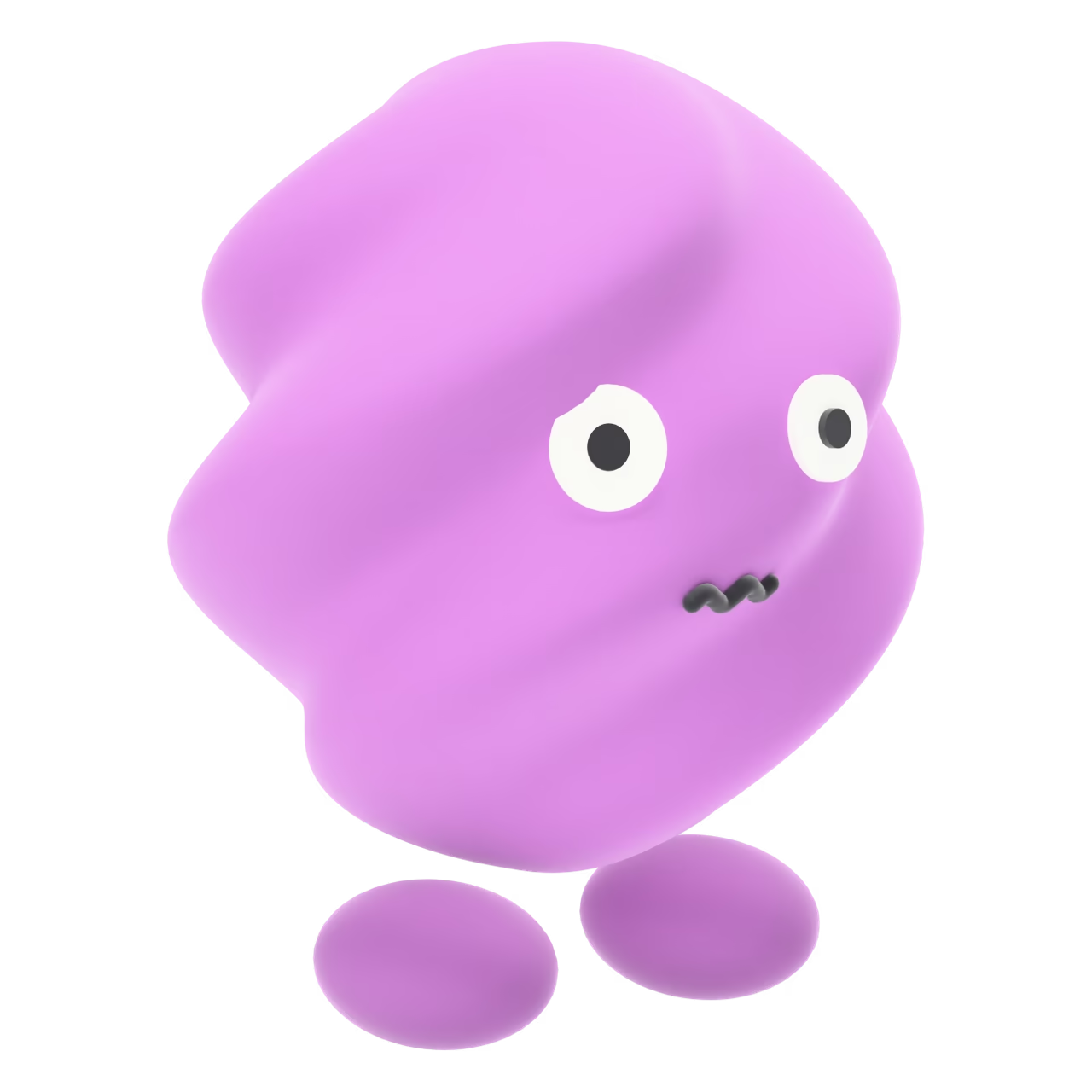
A stressed check-in in Feelbits takes a few seconds: turn the dial, tap Stressed, and its Feelbit joins your village. Over time, Me shows a pie for each day and a quilt for each month, so you can see whether stress was one busy week or most of the month. More on that in How to track your mood.
When it’s more than everyday stress
If stress gets in the way of daily life most days, or it just never lets up, it’s worth talking to a doctor or therapist.
Words to describe feeling stressed Sunday scaries: why Sunday evenings feel heavy Anxious before work: why mornings feel tense Overwhelmed at work: what to do when it's too much What to say to someone who is stressed What to say to someone who is burnt out
Stressed, or something close?
Guides for when you feel stressed
- What to do when you feel anxious: 7 things that help
- Journaling for your feelings: how to start and what to write
- How to check in with yourself: a 1-minute emotional check-in
- What is emotional granularity? Telling your feelings apart
- Affect labeling: what “name it to tame it” means
- Take a feeling apart: body, read, urge
- Where do you feel it? A 1-minute body check for feelings
- Cyclic sighing: a 5-minute breathing practice to calm down
- Do your worries come true? Try a worry log
Not sure which word fits? Try the feeling word finder.
Sources
- World Health Organization. (2026, March 30). Stress [Questions and answers]. World Health Organization. www.who.int/news-room/questions-and-answers/item/stress
- Seery, M. D. (2011). Challenge or threat? Cardiovascular indexes of resilience and vulnerability to potential stress in humans. Neuroscience and Biobehavioral Reviews, 35(7), 1603–1610. doi.org/10.1016/j.neubiorev.2011.03.003
- Schneiderman, N., Ironson, G., & Siegel, S. D. (2005). Stress and health: Psychological, behavioral, and biological determinants. Annual Review of Clinical Psychology, 1, 607–628. doi.org/10.1146/annurev.clinpsy.1.102803.144141
- Engert, V., Plessow, F., Miller, R., Kirschbaum, C., & Singer, T. (2014). Cortisol increase in empathic stress is modulated by emotional closeness and observation modality. Psychoneuroendocrinology, 45, 192–201. doi.org/10.1016/j.psyneuen.2014.04.005
- Jamieson, J. P., Nock, M. K., & Mendes, W. B. (2012). Mind over matter: Reappraising arousal improves cardiovascular and cognitive responses to stress. Journal of Experimental Psychology: General, 141(3), 417–422. doi.org/10.1037/a0025719
- Kross, E., Bruehlman-Senecal, E., Park, J., Burson, A., Dougherty, A., Shablack, H., Bremner, R., Moser, J., & Ayduk, O. (2014). Self-talk as a regulatory mechanism: How you do it matters. Journal of Personality and Social Psychology, 106(2), 304–324. doi.org/10.1037/a0035173
- Lieberman, M. D., et al. (2007). Putting feelings into words. Psychological Science, 18(5), 421–428. doi.org/10.1111/j.1467-9280.2007.01916.x
- Torre, J. B., & Lieberman, M. D. (2018). Putting feelings into words: Affect labeling as implicit emotion regulation. Emotion Review, 10(2), 116–124. doi.org/10.1177/1754073917742706