Meh, in short
Feeling meh means feeling flat and indifferent, neither good nor bad. What helps: planning in something you enjoy, setting small targets you can easily reach, and telling someone how you feel.
Nothing is wrong, exactly. Nothing is very right either. Ask yourself what you’d like to do, and the honest answer is “whatever”.
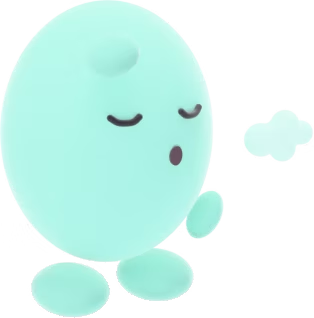
Feelbits has a word for it: Meh, “flat and indifferent, neither good nor bad”. It’s a quiet feeling, and still worth a name.
Meh is often a mood
A feeling usually has a cause and passes within minutes. A mood is longer and lower: it can last hours or days and often has no clear cause (Gross, 2015).
Meh often works like a mood. You can’t point at what started it, and it colours the whole afternoon. That’s fine. You don’t need a reason to notice it.
The flat corner
Researchers who study flow, the feeling of being fully absorbed, describe a corner where both the challenge and your skills are low, and everything feels flat (Nakamura and Csikszentmihalyi, 2002). In a week-long study of 78 working adults, people spent their free time more often in that corner than their time at work. The twist: in their free time, they less often wished they were doing something else, even when they weren’t in flow (Csikszentmihalyi and LeFevre, 1989).
So a meh evening on the sofa isn’t a problem in itself. Sometimes flat is just resting.
Where your mind goes
In a large iPhone study, people’s minds wandered almost half the time. Wandering to pleasant things felt about as good as being present, but wandering to neutral things went with feeling less happy (Killingsworth and Gilbert, 2010). A meh afternoon can be partly a mind drifting to nothing much.
Meh, bored, okay, tired or sad?
Five feelings that can all look like a grey afternoon:
- Meh: flat and indifferent, neither good nor bad.
- Bored: nothing feels interesting or engaging right now.
- Okay: fine. Nothing much going on either way.
- Tired: low on energy and in need of rest.
- Sad: heavy and down because of a loss or something that hurt.
Bored is restless: it wants something interesting and can’t find it. Meh doesn’t much care either way. Okay is plainly fine. Meh has a bit of grey to it. Tired is about energy, and Sad is heavier, with a loss or a hurt behind it.
Nudging a meh day
Meh doesn’t always need fixing. If you’d like to nudge it, a few things with some evidence behind them:
Plan in something you enjoy
In a study of 233 adults, people who built their days around things they enjoy reported more good feelings (Catalino, Algoe and Fredrickson, 2014). Not chasing a feeling, just making room for the stuff you like.
Go small
For low mood, the NHS suggests not trying to do everything at once, and setting small targets you can easily reach. It also suggests regular exercise, which may improve your mood and help you sleep better (NHS, 2026).
Find a little stretch
Flow tends to show up when a challenge stretches your skills a little (Nakamura and Csikszentmihalyi, 2002). If meh comes from an evening of nothing much, something slightly harder than scrolling may help more than something easier.
Say it to someone
The NHS’s tips for low mood start with talking about your feelings to a friend, family member, healthcare professional or counsellor (NHS, 2026). “I’m a bit meh today” counts.
Journal prompts for feeling meh
Meh answers are allowed here. One word is fine.
Notice
- What are you doing right now, and how long have you been at it?
- If today’s meh were a kind of weather, what would it be?
- Is it flat, or closer to bored, tired or sad?
- How does your body feel: rested, restless, heavy, just fine?
- Has it been a meh hour, a meh day or a meh week?
Understand
- Is today too easy, too empty, or just quiet?
- Where has your mind been drifting today?
- When did you last feel a bit more into things, and what were you doing?
- Is this flat feeling a rest, or is it getting in the way of things you care about?
- What did you enjoy last week, even a little?
Act
- What’s one small thing you could easily do in the next hour?
- What’s something you enjoy that you could plan into tomorrow?
- What would be just a little harder than scrolling right now?
- Could a short walk or a bit of movement fit into today?
- Who could you tell “I’m a bit meh today”?
When meh is worth a closer look
A meh afternoon is ordinary. What matters is how long it lasts and how much it takes over. The NHS says a low mood often gets better after a few days or weeks, and that a low mood lasting 2 weeks or more could be a sign of depression (NHS, 2026). Among the signs of depression it lists are having no motivation or interest in things and not getting any enjoyment out of life. It suggests seeing a GP if you have symptoms of depression for most of the day, every day, for more than 2 weeks (NHS, 2023).
Meh in Feelbits
Meh counts as a check-in in Feelbits like any other feeling: tap it, and a little Meh Feelbit joins your village. In Me, every day gets a pie and every month a quilt, which helps you see whether meh was one grey afternoon or most of the month. How to track your mood has more on reading those patterns.
When it’s more than an off day
If meh gets in the way of daily life most days for a couple of weeks, it’s worth talking to a doctor or therapist.
Sad for no reason: why it happens and what helps Post-holiday blues: why coming back feels flat Winter blues: why you feel down when days get short
Meh, or something close?
Guides for when you feel meh
Not sure which word fits? Try the feeling word finder.
Sources
- Gross, J. J. (2015). Emotion regulation: Current status and future prospects. Psychological Inquiry, 26(1), 1–26. doi.org/10.1080/1047840x.2014.940781
- Nakamura, J., & Csikszentmihalyi, M. (2002). The concept of flow. In C. R. Snyder & S. J. Lopez (Eds.), Handbook of Positive Psychology (pp. 89–105). Oxford University Press. doi.org/10.1093/oso/9780195135336.003.0007
- Csikszentmihalyi, M., & LeFevre, J. (1989). Optimal experience in work and leisure. Journal of Personality and Social Psychology, 56(5), 815–822. doi.org/10.1037/0022-3514.56.5.815
- Killingsworth, M. A., & Gilbert, D. T. (2010). A wandering mind is an unhappy mind. Science, 330(6006), 932. doi.org/10.1126/science.1192439
- Catalino, L. I., Algoe, S. B., & Fredrickson, B. L. (2014). Prioritizing positivity: An effective approach to pursuing happiness? Emotion, 14(6), 1155–1161. doi.org/10.1037/a0038029
- NHS. (2026). Get help with low mood, sadness or depression. National Health Service. www.nhs.uk/mental-health/feelings-symptoms-behaviours/feelings-and-symptoms/low-mood-sadness-depression/
- NHS. (2023). Symptoms: Depression in adults. National Health Service. www.nhs.uk/mental-health/conditions/depression-in-adults/symptoms/