Bored, in short
Feeling bored means nothing feels interesting or engaging right now. What helps: asking whether it’s too easy, too hard or pointless to you, making the task a little harder, and having a few nice things ready to think about.
You’d like to get into something, and nothing on offer seems worth it.
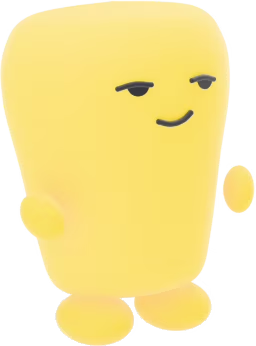
Bored, in Feelbits, is “nothing feels interesting or engaging right now”. It sounds like a small feeling, but it can be surprisingly hard to sit with.
What boredom is
Psychologists who pulled together the main theories of boredom describe it as the unpleasant feeling of wanting, but being unable, to get into something satisfying. Your attention can’t settle on anything, you notice that it can’t, and it tends to feel like the world’s fault for being dull (Eastwood and colleagues, 2012).
What boredom is for
Some researchers argue that boredom has a job. When what you’re doing has stopped giving you anything, boredom pushes you to look for a new goal, so you don’t miss chances you’d otherwise pass by. They also point out that there wasn’t much research on boredom yet (Bench and Lench, 2013).
Another model says boredom comes from two kinds of mismatch, and either one is enough on its own. One is about attention: the task asks too little of your mind, or too much. The other is about meaning: what you’re doing doesn’t connect to anything you care about (Westgate and Wilson, 2018).
So boredom can be a useful clue. Something here is too easy, too hard, or doesn’t matter to you.
Where you feel boredom in your body
In a study of 588 high-school students in China, the students coloured two blank body outlines: one where they felt activity getting stronger, one where it got weaker. The feelings were ones students have about school and studying. Boredom came with less activity across much of the body, while anger came with more all over, and anxiety with more in the head and chest (Zhong and colleagues, 2026). It’s one study, about schoolwork, with teenagers in one country. And these maps show where people say they feel it, not what a machine measured.
Why it’s so hard to sit with
In 11 studies, people were asked to sit alone for 6 to 15 minutes with nothing to do but think. They typically didn’t enjoy it, and they liked dull everyday activities a lot more. In one study, people could give themselves an electric shock during 15 minutes alone. Of 18 men, 12 did it at least once, and so did 6 of 24 women, even though they’d said earlier they would pay not to be shocked again (Wilson and colleagues, 2014).
The researchers’ takeaway: most people seem to prefer doing something to doing nothing, even when that something is unpleasant. So if you reach for your phone the second you’re bored, you’re in good company.
Bored, meh, tired, lonely or curious?
Five feelings that can look like boredom from the outside:
- Bored: nothing feels interesting or engaging right now.
- Meh: flat and indifferent, neither good nor bad.
- Tired: low on energy and in need of rest.
- Lonely: wishing for closeness or company you do not have.
- Curious: wanting to explore, learn or find out more.
Bored still wants something. It’s restless, looking for anything worth doing. Meh doesn’t much care either way. Tired wants rest, not something interesting. If what’s missing is people rather than things to do, that’s closer to Lonely. And curious is what boredom is waiting for.
How to get unstuck from boredom
Ask what’s missing
Is this too easy, too hard, or pointless to you? Those are the two kinds of mismatch from the model above (Westgate and Wilson, 2018), and they may call for different fixes. Too little to do may call for more to it, too much for a smaller piece, and something that doesn’t matter to you for a reason, or a swap.
Find the stretch
Flow is being fully absorbed in what you’re doing, and time seems to fly. It tends to show up when a challenge stretches your skills a little. Too easy, and it tips into boredom (Nakamura and Csikszentmihalyi, 2002). In a week-long study of 78 working adults, people found flow mostly at work, and spent their free time more often in low challenge, low skill moments (Csikszentmihalyi and LeFevre, 1989).
Next time something bores you, try making it a little harder.
Give your thoughts something to hold
Thinking for fun is harder than it sounds. In one set of studies, everyone listed topics they’d enjoy thinking about, and some also got a simple aid to help them do it. Those who got the aid found it easier and enjoyed it more (Westgate, Wilson and Gilbert, 2017). So before a long wait, it may help to have a few nice things ready to think about, and something to remind you of them.
Journal prompts for boredom
A boring wait is a good time for these. One line each is enough.
Notice
- What are you doing, or supposed to be doing, right now?
- What does the boredom make you reach for: your phone, a snack, the door?
- Where does your attention keep going instead?
- Is it restless and bored, or closer to meh, tired or lonely?
Understand
- Is this too easy, too hard, or does it just not matter to you?
- What would make this feel worth doing?
- When in your week does boredom turn up most?
- What last held your attention for a long time, and what made it work?
- Are you missing something to do, or someone to do it with?
Act
- How could you make this a little harder, or turn it into a game?
- If it’s too much, what’s the smallest piece you could start with?
- What’s one reason this matters to you, or what could you swap it for?
- What are three nice things you could think about next time you have to wait?
- What have you been curious about lately that you could look into?
Bored in Feelbits
Bored has a Feelbit of its own in the app. Tap it on the dial and it joins your village; add what it’s about, and over a few weeks you may see where boredom keeps turning up. The Learn path Small joys has a short lesson on flow and when it tends to show up. If you’re not sure it’s boredom at all, How to name your feelings can help you find the closer word.
If it’s less “nothing here is interesting” and more “nothing interests me”, and it has lasted a while, the Meh page has more on when that’s worth a closer look.
Bored, or something close?
Not sure which word fits? Try the feeling word finder.
Sources
- Eastwood, J. D., Frischen, A., Fenske, M. J., & Smilek, D. (2012). The unengaged mind: Defining boredom in terms of attention. Perspectives on Psychological Science, 7(5), 482–495. doi.org/10.1177/1745691612456044
- Bench, S. W., & Lench, H. C. (2013). On the function of boredom. Behavioral Sciences, 3(3), 459–472. doi.org/10.3390/bs3030459
- Westgate, E. C., & Wilson, T. D. (2018). Boring thoughts and bored minds: The MAC model of boredom and cognitive engagement. Psychological Review, 125(5), 689–713. doi.org/10.1037/rev0000097
- Zhong, S., Tang, X., Cheng, X., & Pan, Y. (2026). Bodily maps of subject-specific feelings and academic emotions among high school students. BMC Psychology, 14, 499. doi.org/10.1186/s40359-026-04283-1
- Wilson, T. D., Reinhard, D. A., Westgate, E. C., Gilbert, D. T., Ellerbeck, N., Hahn, C., Brown, C. L., & Shaked, A. (2014). Just think: The challenges of the disengaged mind. Science, 345(6192), 75–77. doi.org/10.1126/science.1250830
- Nakamura, J., & Csikszentmihalyi, M. (2002). The concept of flow. In C. R. Snyder & S. J. Lopez (Eds.), Handbook of Positive Psychology (pp. 89–105). Oxford University Press. doi.org/10.1093/oso/9780195135336.003.0007
- Csikszentmihalyi, M., & LeFevre, J. (1989). Optimal experience in work and leisure. Journal of Personality and Social Psychology, 56(5), 815–822. doi.org/10.1037/0022-3514.56.5.815
- Westgate, E. C., Wilson, T. D., & Gilbert, D. T. (2017). With a little help for our thoughts: Making it easier to think for pleasure. Emotion, 17(5), 828–839. doi.org/10.1037/emo0000278