Lonely, in short
Feeling lonely means wishing for closeness or company you do not have. What helps: checking your guesses about how others see you, saying hello anyway, and sending someone a thank-you.
You can feel lonely on your own on a Sunday evening, and you can feel it at a party full of people. Either way it’s the same wish: closeness or company that isn’t there right now.
That wish is the heart of Feelbits’ one line for Lonely, and the wish is what counts, not how many people are around.
Lonely isn’t the same as alone
The World Health Organization describes loneliness as the painful feeling that comes from a gap between the connection you want and the connection you have. Having few people around is something else, called social isolation (World Health Organization, 2025).
People can live fairly solitary lives and not feel lonely, and they can have a busy social life and feel lonely anyway. What counts is whether your connections meet your needs, and especially how good they are, not just how many (Hawkley and Cacioppo, 2010).
And you’re far from the only one. In 2025, WHO’s Commission on Social Connection reported that 1 in 6 people worldwide is affected by loneliness. Among 13 to 29 year olds, 17 to 21% said they felt lonely, most of all teenagers (World Health Organization, 2025).
What loneliness is for
Loneliness researchers Louise Hawkley and John Cacioppo have suggested that loneliness is the social version of hunger and thirst: an unpleasant pull that pushes us to keep and build the connections we need (Hawkley and Cacioppo, 2010).
Seen that way, loneliness isn’t a flaw. It’s a nudge towards people.
Why it can feel hard to reach out
Loneliness can also make you warier. In Hawkley and Cacioppo’s model, lonely people tend to see the social world as more threatening and expect more negative interactions. Those expectations can draw out the very reactions they fear, so people can end up pulling away while feeling it’s others keeping the distance (Hawkley and Cacioppo, 2010).
That isn’t your fault. It just means your guesses about how others see you may be gloomier than the truth.
Lonely, sad or bored?
Four feelings that are easy to mix up, in Feelbits’ words:
- Lonely: wishing for closeness or company you do not have.
- Sad: heavy and down because of a loss or something that hurt.
- Bored: nothing feels interesting or engaging right now.
- Connected: close to and understood by other people.
Lonely is about people who aren’t there, or don’t feel close. Sad is heavier, about a loss or something that hurt. Bored is about nothing grabbing you. Connected is what lonely is wishing for.
Telling them apart is worth it: in a three-week study of 106 young social drinkers, on days when bad feelings ran high, the ones who told those feelings apart drank less (Kashdan and colleagues, 2010). And just naming it, out loud, on paper or from a list, can quiet the brain’s alarm a little (Lieberman and colleagues, 2007).
Small steps towards people
Check your guesses
A review of programmes to reduce loneliness compared four approaches: social skills, support, more chances to meet people, and working on unhelpful thoughts about others. In the randomised studies, working on those thoughts did best (Masi and colleagues, 2011).
One guess worth checking: after chatting with someone new, people underestimated how much the other person liked them and enjoyed their company. Researchers found this “liking gap” between strangers in a lab, between new dorm mates at college and at a workshop, and among dorm mates it lasted for months (Boothby and colleagues, 2018).
Say hello anyway
Commuters asked to talk to a stranger on the train had a more positive ride than those who kept to themselves, though other commuters predicted the opposite. We tend to underestimate how keen others are to talk (Epley and Schroeder, 2014).
Send a thank-you
People who wrote a thank-you letter underestimated how happy and surprised the reader would be, and overestimated how awkward the reader would find it. The writers were in a better mood afterwards too (Kumar and Epley, 2018).
Questions to write about when you feel lonely
Gentle ones, mostly about small next steps. Answer one and leave the rest for another evening.
Notice
- Where are you right now, and when did you last talk to someone?
- Is this lonely for one person in particular, or for company in general?
- How does it feel in your body right now?
- Is it lonely, or closer to sad or bored?
Understand
- When did the feeling start today, and what was happening around then?
- What kind of closeness are you wishing for: a long talk, a laugh, someone just being there?
- What guess are you making about how others see you right now? How sure are you of it?
- When did you last feel connected, and what made it feel that way?
Act
- Who is one person you could send a short message to today?
- Who could you thank for something, even something small?
- Where could you say hello to someone this week: a colleague, the person at the bakery, someone at the gym?
- What’s one place you could go where people are around?
- If a friend felt this way, what would you suggest to them?
Lonely in Feelbits
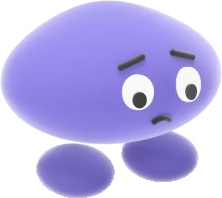
On a lonely evening, a check-in in Feelbits is a small thing to do: turn the dial, tap Lonely, and a little Lonely Feelbit joins your village. The Learn path Small joys has short lessons on saying hello and thank-yous, and How to name your feelings helps when lonely, sad and bored blur together.
When it’s more than a lonely evening
If loneliness hangs on and gets in the way of daily life most days, it’s worth talking to a doctor or therapist. Telling a professional counts as reaching out too.
Journal prompts for when you feel lonely Words to describe feeling lonely Lonely at night: why it hits harder after dark Lonely after moving: why a new city feels empty Lonely during the holidays: why it hits harder Lonely in a relationship: why it happens What to say to someone who is lonely
Lonely, or something close?
Not sure which word fits? Try the feeling word finder.
Sources
- World Health Organization. (2025, June 30). Social connection linked to improved health and reduced risk of early death [News release]. www.who.int/news/item/30-06-2025-social-connection-linked-to-improved-heath-and-reduced-risk-of-early-death
- Hawkley, L. C., & Cacioppo, J. T. (2010). Loneliness matters: A theoretical and empirical review of consequences and mechanisms. Annals of Behavioral Medicine, 40(2), 218–227. doi.org/10.1007/s12160-010-9210-8
- Kashdan, T. B., Ferssizidis, P., Collins, R. L., & Muraven, M. (2010). Emotion differentiation as resilience against excessive alcohol use: An ecological momentary assessment in underage social drinkers. Psychological Science, 21(9), 1341–1347. doi.org/10.1177/0956797610379863
- Lieberman, M. D., et al. (2007). Putting feelings into words. Psychological Science, 18(5), 421–428. doi.org/10.1111/j.1467-9280.2007.01916.x
- Masi, C. M., Chen, H.-Y., Hawkley, L. C., & Cacioppo, J. T. (2011). A meta-analysis of interventions to reduce loneliness. Personality and Social Psychology Review, 15(3), 219–266. doi.org/10.1177/1088868310377394
- Boothby, E. J., Cooney, G., Sandstrom, G. M., & Clark, M. S. (2018). The liking gap in conversations: Do people like us more than we think? Psychological Science, 29(11), 1742–1756. doi.org/10.1177/0956797618783714
- Epley, N., & Schroeder, J. (2014). Mistakenly seeking solitude. Journal of Experimental Psychology: General, 143(5), 1980–1999. doi.org/10.1037/a0037323
- Kumar, A., & Epley, N. (2018). Undervaluing gratitude: Expressers misunderstand the consequences of showing appreciation. Psychological Science, 29(9), 1423–1435. doi.org/10.1177/0956797618772506